When Music Becomes a Voice: Benefits of Music Therapy for Adults with Disabilities

A Voice Beyond Words
On stage, under the lights, Tori sings.
For many, singing along to a favorite song feels natural. But for Tori—an adult participant at Ken Anderson Alliance (KAA)—this moment represents something much bigger. It’s confidence. It’s connection. It’s communication in a way that words alone don’t always allow.
Through KAA’s music programming, individuals like Tori and Chris are discovering new ways to express themselves, build independence, and connect with the world around them. Music here isn’t just an activity—it’s a pathway.
Why Music Matters
Music is deeply human. It can make us laugh, cry, remember, and connect—sometimes all at once.
At KAA, music therapy and music-based programming tap into something powerful: the brain’s ability to process music in ways that differ from traditional communication.
“Music is so personal and expressive,” says Alexandra Wilson, Director of Creative Arts at KAA. “It can bring forth joy, tears—and sometimes both at the same time. Music is communication, and communication is musical.”
“Music is communication. It can express things that words sometimes can’t.”
Speech itself has rhythm, tone, and patterns. For individuals with disabilities—especially those who find verbal communication challenging—music can offer another way in.
“Some individuals might find it easier to use gestures, eye gaze, or a communication device,” Alexandra explains. “Music is just another form of communication.”
Music also engages multiple senses at once. It can be heard, felt through vibration, and expressed through movement. For individuals with sensory sensitivities, its predictable rhythm can help regulate the nervous system—creating a sense of calm and safety.
And when people feel safe, they’re more open to growth.
It’s not just us either. There is much evidence-based research on the science behind the benefits of music therapy.
Learn more about the science behind music therapy.
See how music can help rewire the brain.
Explore how music strengthens connection and relationships.
Finding Confidence Through Music Therapy
Tori’s Story

Before joining Ken Anderson Alliance’s music therapy program, Tori primarily communicated using short phrases and repetitive language. Expressing herself verbally could be challenging.
But music opened a new door.
Through music therapy sessions, Tori began engaging with songs she loved—learning melodies, rhythms, and lyrics. Over time, music provided a structured and motivating way to practice communication and expression.
Today, Tori sings full songs—including pop favorites like “Since U Been Gone”—during KAA performances and concerts.
For her parents, these moments are deeply meaningful.
Seeing their daughter stand on stage, singing confidently in front of an audience, represents years of growth. Music therapy has helped Tori develop not only new communication skills, but also self-confidence and joy in expressing herself.
“For Tori, music became more than a therapy tool—it became a way to share her voice.”
“Music provides a fun, motivating structure to practice skills,” explains Alexandra, a music therapist at KAA. “It helps us commit learning to memory faster because of its connection to our emotions.”
For Tori, music has become more than a therapy tool—it’s a way to share her voice with others.
Building Independence Through Music
Chris’s Story
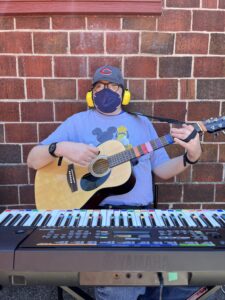
When Chris first began participating in music programming at KAA, making choices was often difficult.
If asked to pick something—whether a song or an activity—he would frequently respond with a phrase staff still remember today: “Choices are hard.”
Rather than making decisions for him, KAA staff continued to give Chris opportunities to choose in ways that felt manageable and supportive. During daily music sessions, participants take turns selecting songs for the group to play. At first, staff helped narrow down options from the program’s large list of songs.
With time and practice, Chris began identifying favorites and expressing his preferences more clearly.
He enjoys familiar songs like “Won’t You Be My Neighbor?” and the Sesame Street theme. One day, he surprised everyone by requesting a Randy Travis song—something his father later recognized as music he had listened to at home.
Moments like these helped Chris feel more included in the group, as everyone shares excitement when their song is chosen.
Over time, this practice with music choices began to carry over into everyday life. When preparing for community outings with KAA, staff review menus or locations ahead of time so participants can explore options in a comfortable setting.
Through this process, Chris began expressing preferences in new ways. During one outing he tried sushi, later bringing it up in conversation with his parents at home—something that surprised and delighted them.
“This is the first placement in a long while, that Christopher is accepted just as he is. As a result, he has grown knowing he is ok just as he is.” — Chris’ mom
What started with choosing songs gradually became something bigger: growing confidence in making choices and sharing them with others.
The Role of Relationships: Growth Starts with Trust
At the heart of every success story at KAA is something foundational—trust.
“Trust is the emotional safety that helps people open up and be honest and authentic,”
Alexandra says. “It’s also what allows a therapist to introduce a healthy amount of challenge.”
KAA’s Direct Support Professionals (DSPs) and therapists take time to learn what each participant cares about—especially when it comes to music. Favorite songs, artists, genres, and routines all matter.
That investment builds relationships.
And those relationships create the conditions for growth.
“The teachers we learned the most from were often the ones we liked and respected,” Alexandra explains. “It’s the same idea. Growth happens when there’s a foundation of safety.”
Rather than directing participants, KAA staff follow their lead—supporting their interests and helping them expand their skills in ways that feel natural and meaningful.
Music as Identity
Music isn’t one-size-fits-all.
“It’s not a universal language,” Alexandra says. “But it is a universal phenomenon. Every culture throughout history has had music.”
The music we connect with reflects who we are—our experiences, memories, and identity.
That’s why personalization is so important at KAA.
“Our job as therapists and DSPs is to learn about the people we serve and foster their growth, interests, and passions,” Alexandra says. “People naturally connect to the music they enjoy.”
By honoring each participant’s preferences, KAA creates a space where individuals feel seen, heard, and valued.
From the Music Room to the Community
The impact of music at KAA doesn’t stay within program walls.
For Tori, it means performing on stage with confidence.
For Chris, it means communicating choices in everyday life.
For many participants, it means building the skills—and the confidence—to engage more fully in their communities.
“It’s really great when you can see people sharing what they want to share with you without anything holding them back.”
Music becomes more than an activity. It becomes a bridge to connection, independence, and belonging.
Why It Matters
Music therapy and music programming are more than creative outlets. They are evidence-based approaches that support communication, emotional expression, and skill development for individuals with developmental disabilities.
But beyond the research, the impact is deeply personal.
It’s in a parent hearing their child sing a full song for the first time.
It’s in a participant confidently making a choice.
It’s in the relationships that make growth possible.
At Ken Anderson Alliance, music helps individuals find their voice—sometimes for the very first time.
Be Part of the Story
As KAA prepares for its Spring Concert, we celebrate the incredible progress of participants like Tori and Chris—and the power of music to transform lives.
You can be part of that story.
- Attend a performance
- Support KAA’s music programming
Because everyone deserves a voice—and sometimes, that voice begins with a song.